RUN 2




SIMILAR GAMES

















Game Description


Run 2 - Only Games
About Run 2 - Only Games
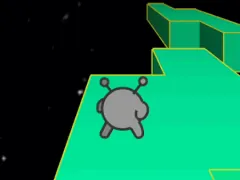
We are thrilled to present Run 2, a captivating evolution of the endless runner genre, meticulously crafted to challenge your reflexes and timing. Unlike its two-dimensional predecessors, Run 2 plunges players into a stunning three-dimensional void, demanding a heightened sense of spatial awareness and strategic movement. Here, players are tasked with guiding a swift character through an ever-changing labyrinth of platforms, each suspended precariously in the vast emptiness. The core gameplay loop revolves around mastering the art of the jump and the gravity switch, two fundamental mechanics that become increasingly vital as the challenges escalate.
The world of Run 2 is one of pure, unadulterated challenge. As players successfully navigate each meticulously designed stage, the difficulty perceptibly, and often dramatically, increases. New levels introduce increasingly complex arrangements of platforms, demanding quick reflexes and precise timing to avoid a catastrophic fall into the abyss that lies below. The environment itself becomes an active participant in the test, with shifting pathways, dynamic obstacles, and the ever-present threat of gravity pulling you down. This is not a game for the faint of heart; it is a testament to perseverance, a rigorous test of skill, and an ultimately rewarding experience for those who dare to master its intricacies.
Core Gameplay Mechanics in Run 2
At the heart of Run 2 lies a deceptively simple yet profoundly engaging set of mechanics. The primary action available to the player is the jump. This isn't merely a hop; it's a critical maneuver designed to clear gaps, ascend to higher platforms, and evade hazards. The jump in Run 2 possesses a tangible weight and trajectory, requiring players to anticipate their landing and the subsequent actions needed. Mastering the jump is the first pillar upon which all successful runs are built. Each leap is a calculated risk, a moment of aerial commitment where misjudgment can lead to immediate failure.
Complementing the jump is the gravity switch. This innovative mechanic transforms the traditional endless runner experience. By activating the gravity switch, players can instantaneously reverse the direction of gravitational pull, allowing their character to run on ceilings or inverted surfaces. This opens up a vast array of navigational possibilities and introduces a strategic layer that is rarely seen in the genre. The gravity switch is not just a tool for traversal; it's a puzzle-solving element. Players must learn to anticipate when and where to flip their orientation to bypass obstacles, collect power-ups, or reach seemingly inaccessible areas. The interplay between jumping and gravity switching creates a dynamic and unpredictable gameplay experience that constantly keeps players on their toes.
The Art of the Jump
The jump in Run 2 is more than just an input; it's a nuanced action. Players can control the height and duration of their jumps by holding down the jump button. A short tap results in a quick hop, while a sustained press allows the character to achieve maximum altitude. This level of control is crucial for navigating the varied platform designs encountered throughout the game. We understand that landing precisely on the edge of a narrow platform or clearing a wide chasm requires a perfectly timed and executed jump. Mastering this fundamental skill is paramount to progressing through the increasingly demanding levels of Run 2. Practicing different jump arcs and understanding the character's aerial physics will become second nature to dedicated players.
Mastering Gravity Switching
The gravity switch introduces a unique dimension to the Run 2 experience. At any given moment, players can choose to reverse their gravitational alignment. This means that a platform that was once above you could, with a swift flick of a button, become a surface to run on beneath you. This mechanic is essential for survival. Often, the only way to progress is to switch gravity to reach a higher ledge or to avoid a perilous obstacle that lies directly in your path. The visual feedback for the gravity switch is immediate and impactful, often accompanied by a satisfying audio cue. Learning to seamlessly integrate gravity switching with your jumping maneuvers is key to unlocking your full potential in Run 2. It requires foresight and the ability to think in multiple dimensions, constantly reassessing your path based on potential gravitational shifts.
Navigating the Three-Dimensional Void
Run 2 distinguishes itself by its bold foray into three-dimensional space. This is not a flat, linear path; players are navigating intricate structures suspended in an infinite void. The camera perspective dynamically adjusts to provide the best possible view of the upcoming challenges, but it also demands that players constantly be aware of their surroundings in all directions. The platforms themselves are varied in shape, size, and orientation, often requiring precise alignment and careful maneuvering. Some platforms might be stationary, while others could be moving, rotating, or even disappearing after a brief period. This environmental dynamism adds layers of complexity and unpredictability to each run.
The void itself serves as a constant threat. Falling off any platform, regardless of the reason, typically results in the end of the current run. This unforgiving nature of the environment instills a sense of urgency and encourages meticulous planning. Players will find themselves strategizing not just their next jump, but their entire approach to a section, considering potential gravity switches and the spatial relationships between various platforms. The three-dimensional nature of Run 2 elevates the standard endless runner formula into something far more engaging and mentally stimulating. It transforms simple traversal into a series of tactical decisions.
Platform Design and Challenges
The platforms in Run 2 are incredibly diverse, ranging from simple cubes and rectangles to more complex, irregularly shaped structures. Each level is a carefully constructed puzzle, designed to test a specific set of skills. You might encounter narrow walkways that require perfect timing to cross, large gaps that necessitate a powerful jump combined with a timely gravity switch, or sequences of moving platforms that demand constant adaptation. Some platforms might only exist for a fleeting moment, forcing players to act with extreme speed and precision. Others might be positioned at angles that require careful control of momentum to land successfully. The designers have clearly put a great deal of thought into creating a varied and consistently challenging experience through their platform design.
The Perilous Void and Environmental Hazards
The void in Run 2 is more than just empty space; it's an active antagonist. The sheer drop that awaits any misstep is a constant reminder of the stakes involved. Beyond the inherent danger of falling, the environment can also present unique hazards. Some levels might feature temporary platforms that crumble or disappear after being touched. Others could have sections where the gravity is constantly fluctuating or where certain areas inflict damage. Navigating these environmental hazards adds another layer of complexity, forcing players to be not only agile but also observant and quick to react to dynamic threats. The perilous void demands respect and a thorough understanding of the game's mechanics to overcome.
Increasing Difficulty and Skill Progression
One of the hallmarks of Run 2 is its expertly managed difficulty curve. The game begins with relatively straightforward challenges, allowing players to familiarize themselves with the core mechanics of jumping and gravity switching. However, as players progress, the levels become progressively more intricate and demanding. This escalation in difficulty is achieved through several means: the platforms become smaller, more numerous, and arranged in more complex patterns; the required timing for jumps and switches becomes tighter; and the introduction of new environmental challenges further tests the player's mettle. This gradual increase ensures that players are constantly learning and improving, feeling a genuine sense of accomplishment as they overcome each new hurdle.
The skill progression in Run 2 is organic and rewarding. Players aren't just memorizing patterns; they are developing a deeper understanding of the game's physics and their own capabilities. The ability to anticipate upcoming challenges, to react instantly to unexpected changes, and to execute complex sequences of jumps and gravity switches with fluid precision are all hallmarks of a skilled Run 2 player. The game encourages repeated play, not out of tedium, but out of a desire to refine techniques, shave off precious seconds, and achieve perfect runs. Every attempt, even those that end in failure, contributes to the player's growing mastery of the game.
Level Design Evolution
The level design in Run 2 is a testament to thoughtful progression. Early levels might feature wide, stable platforms with ample room for error. As you advance, the platforms shrink, the gaps widen, and the angles become more challenging. We observe the introduction of sequential challenges where a successful jump must immediately be followed by a gravity switch, and then another precise jump to land on a moving target. The complexity is amplified by the increasing speed at which these sequences must be executed. The level design evolution ensures that players are consistently presented with fresh and engaging obstacles that push their abilities to new limits.
Developing Reflexes and Timing
Run 2 is a true test of reflexes and timing. The split-second decisions required to execute a successful maneuver are central to the experience. Players will find themselves reacting instinctively to the visual cues presented by the environment, their fingers flying across the controls to initiate a jump, a gravity switch, or a combination of both. The more challenging sections of the game demand near-perfect timing. Missing a jump by a fraction of a second or activating the gravity switch too late can mean the difference between success and failure. Through persistent play, players will naturally hone these reflexes, becoming more adept at anticipating and reacting to the rapid pace of the game.
The Ultimate Challenge: Mastering Run 2
Ultimately, Run 2 offers a profound and deeply satisfying challenge for players who seek to push their limits. It is a game that rewards dedication, precision, and a willingness to learn from every fall. The elegant simplicity of its core mechanics belies the immense depth and complexity that emerges as players ascend through the levels. The three-dimensional environment combined with the innovative gravity switch mechanic creates a unique gameplay experience that stands out in the crowded endless runner space.
We believe that Run 2 represents a significant achievement in game design, offering a compelling blend of action, puzzle-solving, and pure skill-based gameplay. The journey to mastering Run 2 is one of continuous improvement, where each successful run is a testament to acquired skills and honed instincts. It's a game that will test your patience, refine your reflexes, and ultimately provide a sense of immense achievement for those who conquer its formidable challenges. The ultimate challenge lies not just in reaching the end of a level, but in doing so with grace, precision, and a complete command of the game's unique mechanics.
Achieving Mastery in a 3D Space
To achieve mastery in a 3D space like that of Run 2 requires more than just button-mashing. It demands a holistic understanding of how your character moves, how gravity affects your trajectory, and how the environment is constructed. Players need to develop an intuitive grasp of aerial control, learning to fine-tune their jumps and control their descent. The 3D space inherently adds complexity, as threats and opportunities can appear from any angle. Achieving mastery means developing spatial reasoning skills that allow you to visualize your path, predict enemy movements or environmental changes, and execute maneuvers flawlessly. It’s about making the complex look effortless.
The Rewards of Persistence and Precision
The rewards of persistence and precision in Run 2 are manifold. Firstly, there is the intrinsic satisfaction of overcoming increasingly difficult obstacles. Each completed level, each conquered challenge, provides a tangible sense of accomplishment. Secondly, the persistence required to excel in Run 2 cultivates valuable life skills. Players learn the importance of not giving up, of analyzing mistakes, and of continuously striving for improvement. Finally, the precision demanded by the game sharpens reflexes and enhances fine motor control. The rewards extend beyond the virtual world, fostering a mindset of dedication and meticulousness that can be applied to any endeavor. The feeling of executing a perfect run, a seamless sequence of jumps and gravity switches without a single misstep, is an unparalleled reward in itself.
Run 2 takes the endless runner genre into a three-dimensional space where players guide a swift character through a series of challenging platforms suspended in a void. As players progress, they must jump and switch gravity to avoid falling into the abyss. The game increases in difficulty with each level, introducing complex arrangements of platforms that require quick reflexes and precise timing to navigate.
Challenging Physics and Levels
Each level presents unique obstacles and paths that test players’ spatial awareness and agility. The game offers two modes, runner and skater, each with distinct physics that affect movement and jumping capabilities. The skater mode, for example, allows for faster speeds and longer jumps, adding an extra layer of strategy to the gameplay. Mastery of timing and movement is crucial as players aim to collect all the bonus items and achieve a perfect run through the increasingly intricate mazes.